
Center for Technology and Design
The NDU Building - Center for Technology and Design
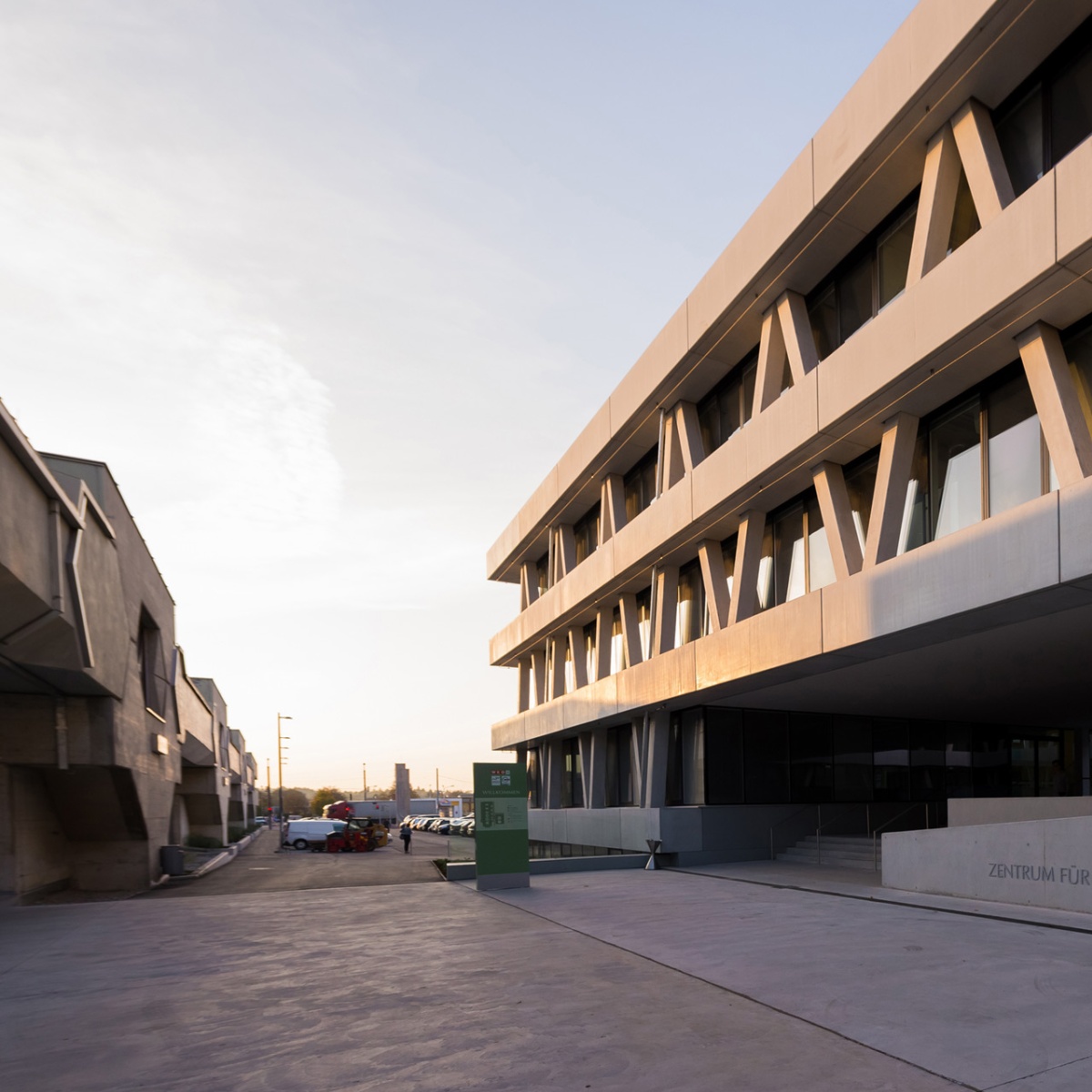
Since fall 2014, the New Design University has been housed in the “Center for Technology and Design” alongside WIFI continuing education facilities. Spanning a total of 13,000 square meters across four floors, a home has been created that brings different educational pathways together under the motto “Meister meets Master”: here, master craftsmen and master’s degree holders are under one roof. Craft-oriented education is combined with state-of-the-art university structures, and different educational pathways are brought closer together not only physically but also in terms of content.
Communication among the various users was a central focus right from the architectural design phase. The Center for Technology and Design was conceived by the architectural firm AllesWirdGut with a focus on interpersonal encounters and interactive processes. The building impresses with its openness, offering views and sightlines throughout, placing spontaneous, interdisciplinary communication at the center, and fostering dialogue across departments. Flexible, optimally equipped spaces enable a new way of learning from and with one another and create an ideal atmosphere for fostering extraordinary ideas.
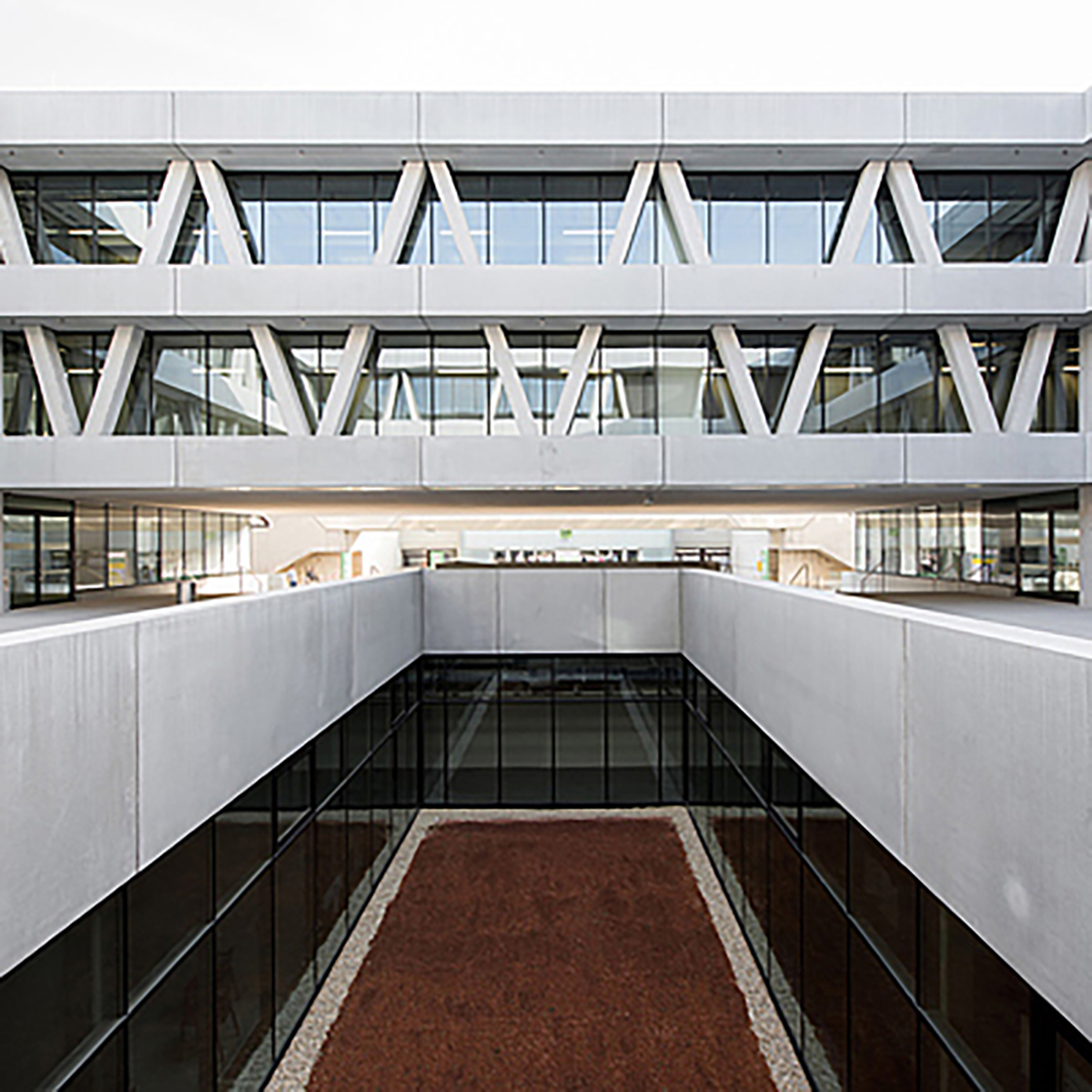
The New Design University is located on the top two floors, while the WIFI classrooms and workshops are situated on the two floors below (ground floor and basement). A shared foyer connects all floors and public areas such as the auditorium, break areas, and presentation zones. The courtyard, which spans a large space between the new building and the existing WIFI main building, serves as a central gathering place and open meeting area.
Distinctive V-shaped columns define the unique character of the NDU building. Exposing the structure and building services of the entire building and foregoing cladding not only conveys clarity but also serves as a veritable “textbook example” for the aspiring designers and technicians. Reducing everything to the essentials—this principle was also applied in the selection of materials. Glass as a thermal envelope creates maximum transparency. Concrete as the primary building material reflects the proximity to the WIFI main building, a listed exposed-concrete structure designed by Karl Schwanzer.